
The market didn’t get louder in 2026.
It got smarter.
After observing serious buyers along Marcos Highway and within Pasig, one pattern became clear:
The strongest decisions came from subtraction.
Not addition.
Here are three things strategic buyers stopped doing — and what they replaced them with.
- They Stopped Chasing the Lowest Price Per Square Meter
Price per sqm looks objective. It feels analytical.
But it ignores:
• Layout efficiency
• Dead space
• Ceiling height
• Future flexibility
Instead, buyers shifted toward usable space.
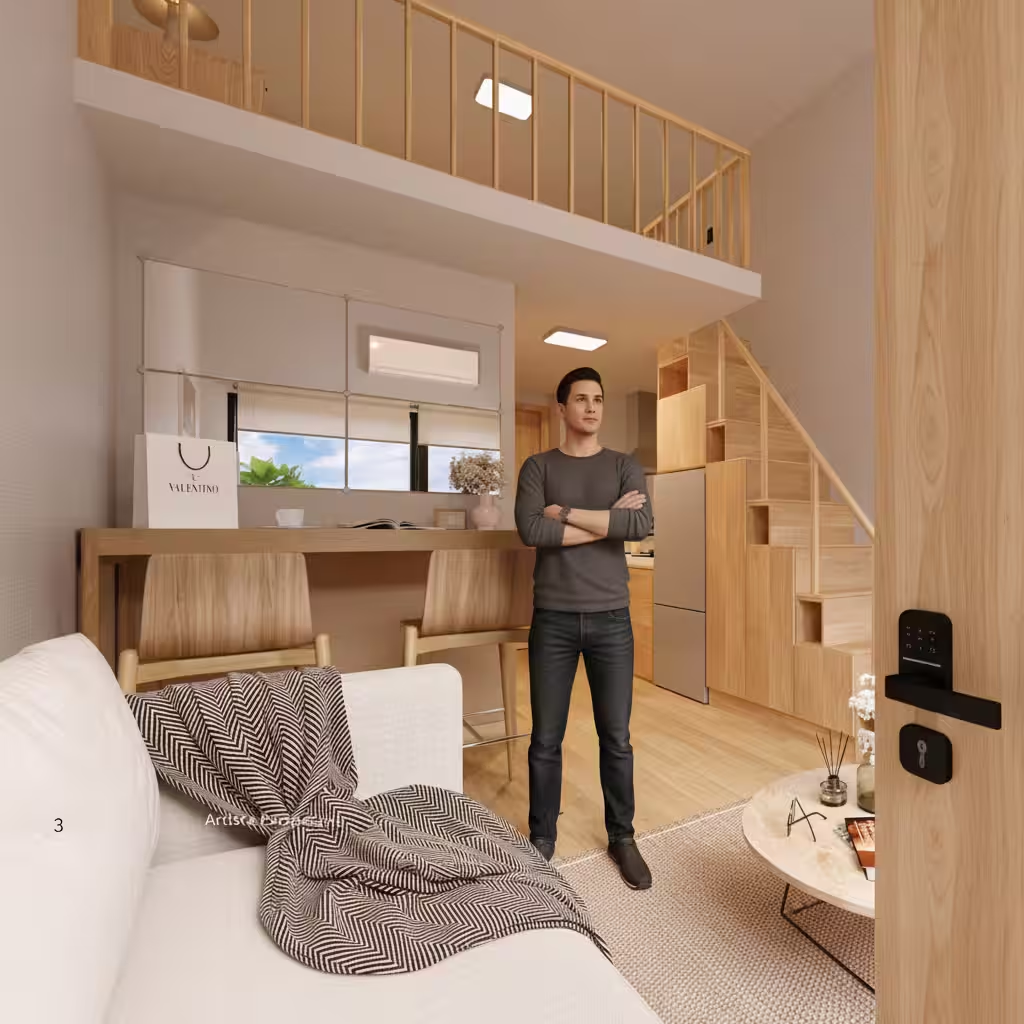
At Lykke Kondo, developed by PH1 World Developers and built by Megawide Construction, Add-Loft Technology converts engineered ceiling height into functional bonus space at no extra cost.
Same footprint.
More separation.
More options.
The question became:
“How much function do I get per peso?”
Not:
“How big is the base floor?”
- They Stopped Ignoring Location Risk
Flood patterns.
Traffic unpredictability.
Distance from essentials.
Some buyers previously chose far locations to maximize size — only to lose hours daily in travel or face environmental stress during heavy rains.
Smart buyers began prioritizing:
Walkability.
Accessibility.
Balanced elevation.
Being 120 meters from Ayala Malls Feliz changed the equation.
Groceries, dining, errands — compressed into minutes instead of hours.
Time became a metric.
- They Stopped Buying Without Evaluating the Developer
Brand matters.
Construction quality affects long-term maintenance.
Engineering affects resilience.
Management affects community experience.
Buyers began researching track records, contractors, and systems — not just model units.
They replaced impulse with due diligence.
The One High-Leverage Action They Replaced It With
Instead of juggling ten small considerations, smart buyers focused on one high-leverage question:
“Will this property make my daily life easier five years from now?”
If the answer was yes — through location, vertical optimization, and managed amenities — the decision became clearer.
In 2026, success in property isn’t about doing more.
It’s about removing what drains you:
Extra commute
Extra risk
Extra unused space
Extra maintenance
And choosing one move that multiplies everything else.
Which of these habits do you think costs buyers the most in the long run?