Author: Sun

  • Happiness Is Having Extra: The Psychology of Bonus Space

    Happiness Is Having Extra: The Psychology of Bonus Space

    There’s a quiet shift that happens when you have extra.

    Not excess.
    Not wasted space.
    Just… extra.

    Extra room to breathe.
    Extra separation between work and rest.
    Extra storage so surfaces stay clear.

    The Danish word “Lykke” means happiness. But in modern urban living, happiness is rarely about grand gestures.

    It’s about functional relief.

    The Stress of Just-Enough Living

    Many city homes are designed to fit — not to flex.

    The dining table becomes the desk.
    The sofa becomes the guest bed.
    The bedroom becomes storage overflow.

    When every area must multitask, tension builds.

    Not dramatically.
    Quietly.

    Cluttered environments increase mental fatigue.
    Overlapping functions blur personal boundaries.
    And “just enough” starts to feel like not enough.

    The Power of Vertical Separation

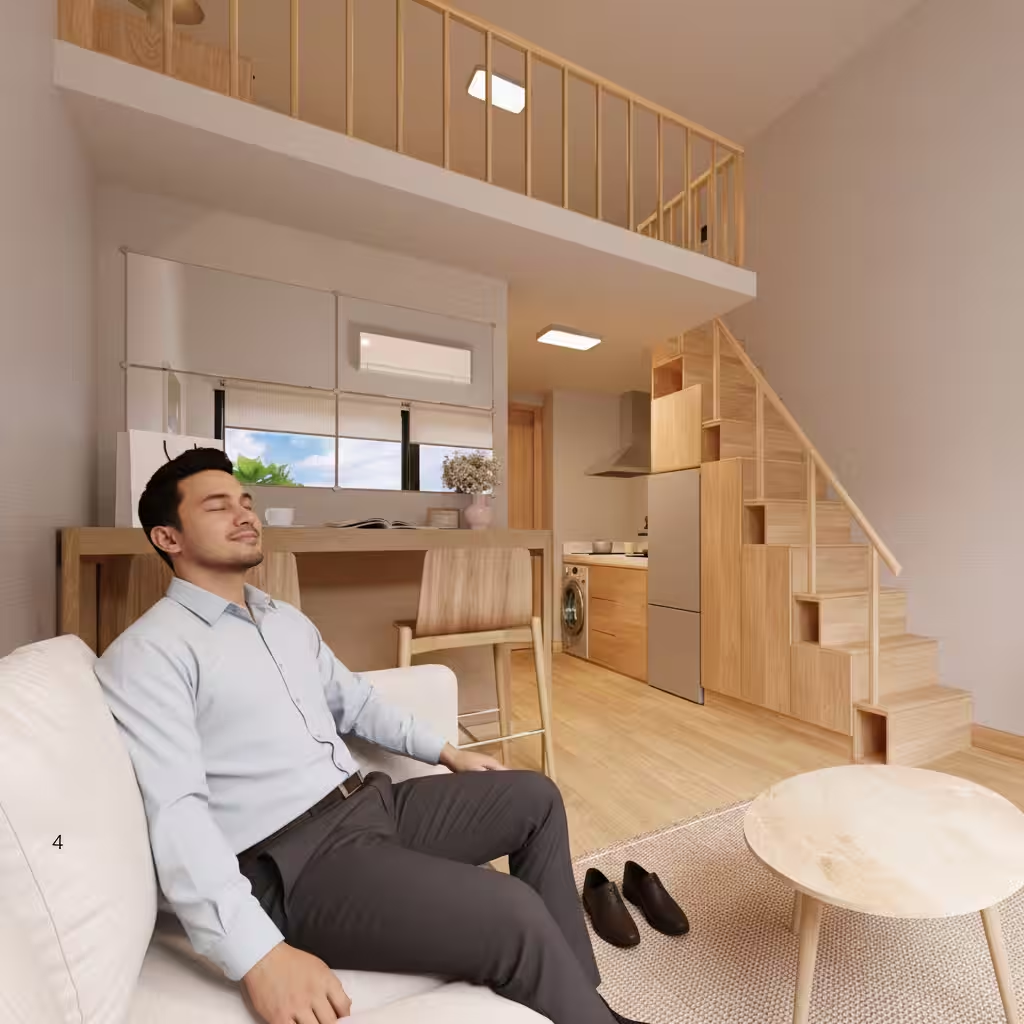
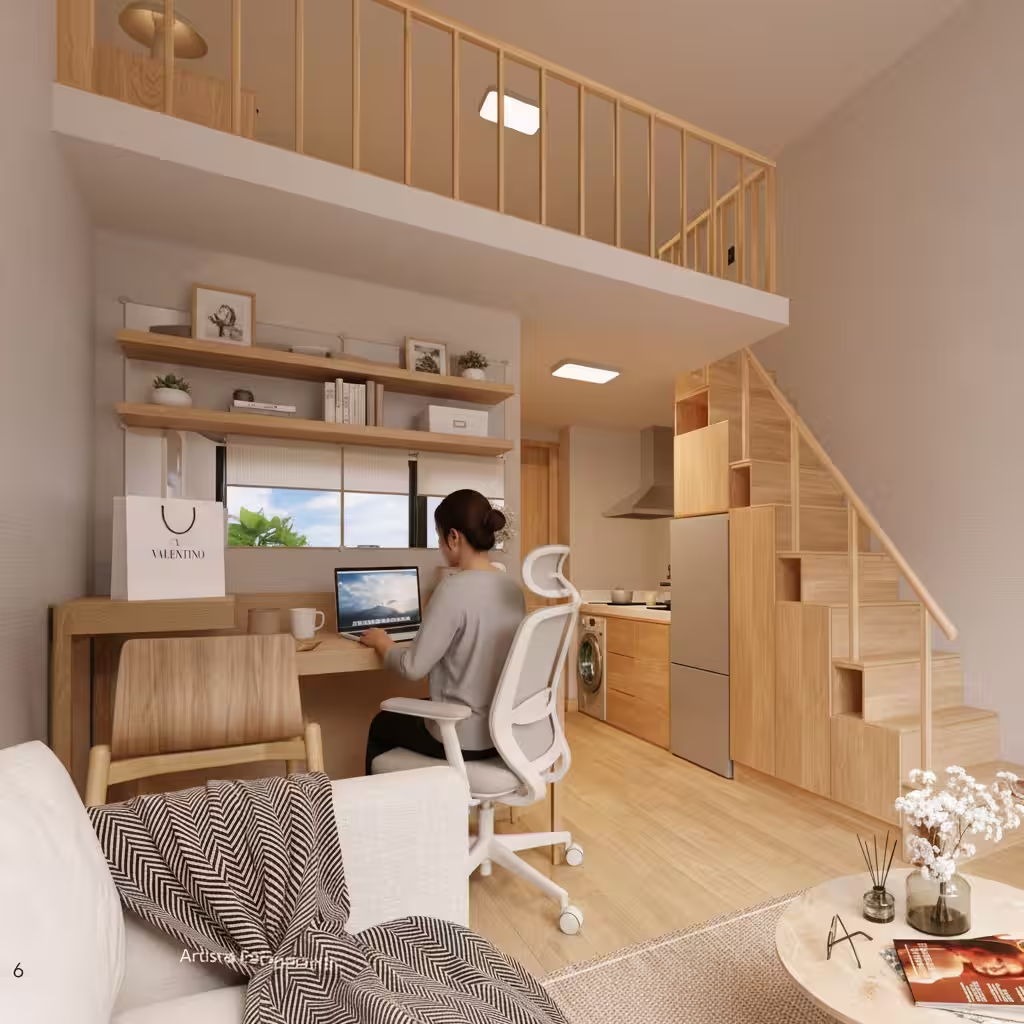
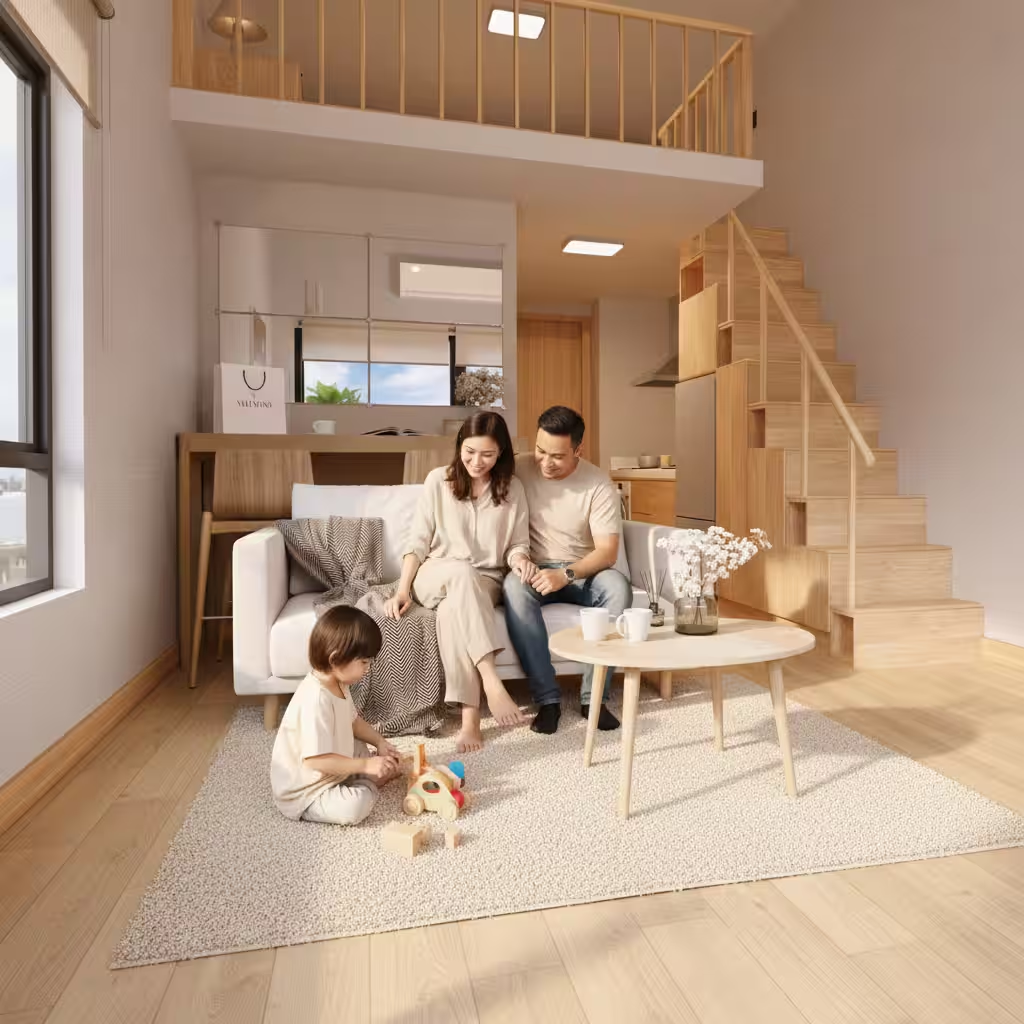
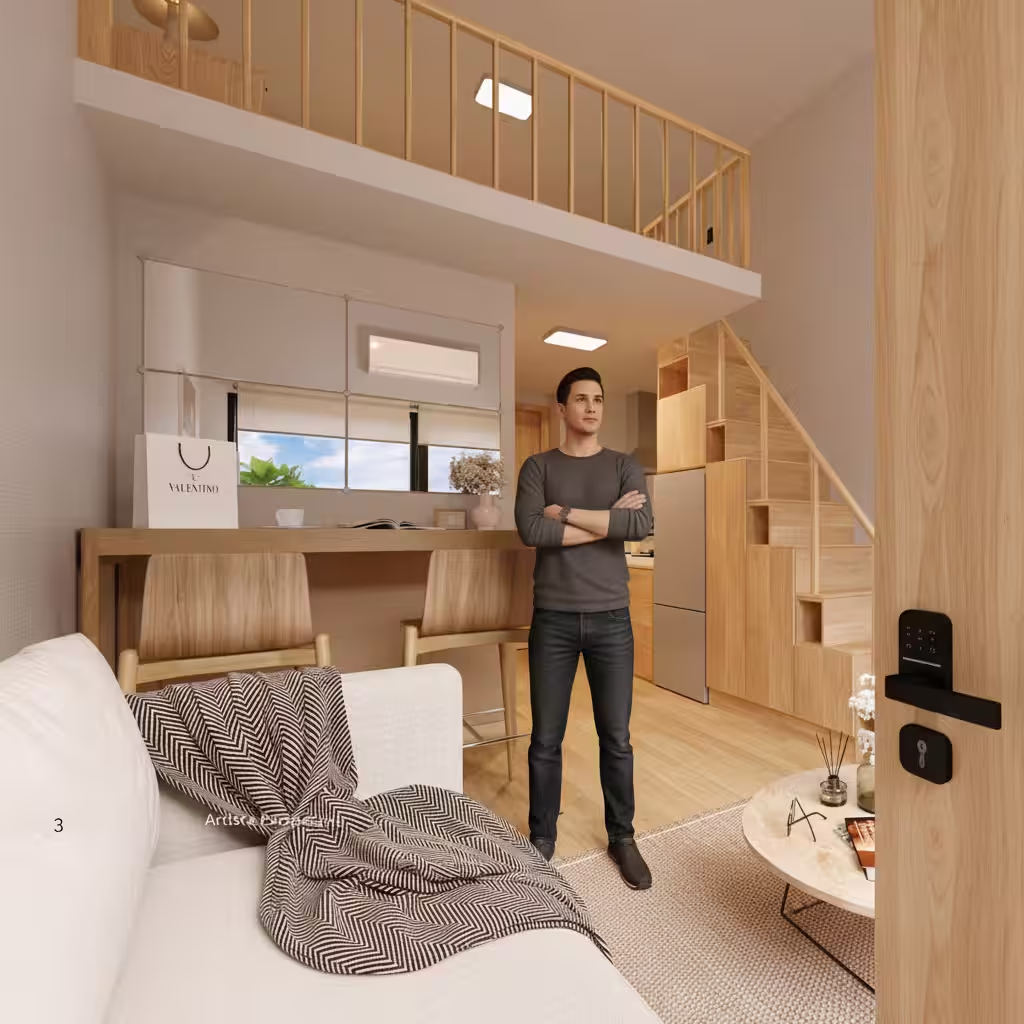
    At Lykke Kondo, developed by PH1 World Developers and built by Megawide Construction, Add-Loft Technology transforms engineered ceiling height into usable bonus space — at no extra cost.

    That single structural decision changes how a home feels.

    Studio:
    23.56 sqm base + 9.37 sqm loft

    1 Bedroom:
    38.19 sqm base + 14.20 sqm loft

    2 Bedroom:
    60.94 sqm base + 21.51 sqm loft

    It’s not about impressing guests with size.

    It’s about:

    • A workspace that doesn’t invade your bedroom
    • Storage that doesn’t dominate your living area
    • A reading nook that feels intentional
    • A child’s play zone that doesn’t take over the floor

    Vertical design creates boundaries without expanding your footprint.

    Location Enhances the Feeling of Extra

    Located along Marcos Highway in Pasig, and just 120 meters from Ayala Malls Feliz, Lykke Kondo reduces the need to overcompensate at home.

    You don’t need to stockpile groceries for weeks.
    You don’t need excessive storage for rarely used items.
    Access replaces accumulation.

    And when your home isn’t overloaded, your mind isn’t either.

    In 2026, happiness isn’t about having the biggest property.

    It’s about having room for what matters — and no competition between your roles.

    Extra doesn’t mean more clutter.
    Extra means more clarity.

    If your home had one more functional zone, what would you create?
  • Three Things Smart Buyers Stopped Doing in 2026

    Three Things Smart Buyers Stopped Doing in 2026

    The market didn’t get louder in 2026.
    It got smarter.

    After observing serious buyers along Marcos Highway and within Pasig, one pattern became clear:

    The strongest decisions came from subtraction.

    Not addition.

    Here are three things strategic buyers stopped doing — and what they replaced them with.

    1. They Stopped Chasing the Lowest Price Per Square Meter

    Price per sqm looks objective. It feels analytical.

    But it ignores:

    • Layout efficiency
    • Dead space
    • Ceiling height
    • Future flexibility

    Instead, buyers shifted toward usable space.

    At Lykke Kondo, developed by PH1 World Developers and built by Megawide Construction, Add-Loft Technology converts engineered ceiling height into functional bonus space at no extra cost.

    Same footprint.
    More separation.
    More options.

    The question became:
    “How much function do I get per peso?”

    Not:
    “How big is the base floor?”

    1. They Stopped Ignoring Location Risk

    Flood patterns.
    Traffic unpredictability.
    Distance from essentials.

    Some buyers previously chose far locations to maximize size — only to lose hours daily in travel or face environmental stress during heavy rains.

    Smart buyers began prioritizing:

    Walkability.
    Accessibility.
    Balanced elevation.

    Being 120 meters from Ayala Malls Feliz changed the equation.

    Groceries, dining, errands — compressed into minutes instead of hours.

    Time became a metric.

    1. They Stopped Buying Without Evaluating the Developer

    Brand matters.

    Construction quality affects long-term maintenance.
    Engineering affects resilience.
    Management affects community experience.

    Buyers began researching track records, contractors, and systems — not just model units.

    They replaced impulse with due diligence.

    The One High-Leverage Action They Replaced It With

    Instead of juggling ten small considerations, smart buyers focused on one high-leverage question:

    “Will this property make my daily life easier five years from now?”

    If the answer was yes — through location, vertical optimization, and managed amenities — the decision became clearer.

    In 2026, success in property isn’t about doing more.

    It’s about removing what drains you:

    Extra commute
    Extra risk
    Extra unused space
    Extra maintenance

    And choosing one move that multiplies everything else.

    Which of these habits do you think costs buyers the most in the long run?

  • Amenities Are Not Luxuries — They’re Financial Assets

    Amenities Are Not Luxuries — They’re Financial Assets

    Most buyers see amenities as decoration.

    Pool.
    Gym.
    Coworking space.
    Playroom.

    Nice to have.

    But in 2026, the smarter way to evaluate amenities is this:

    What would it cost you outside?

    Let’s break it down strategically.

    The Gym Equation

    Average gym memberships in Metro Manila range from mid to premium tiers depending on location.

    Now multiply that by 12 months.

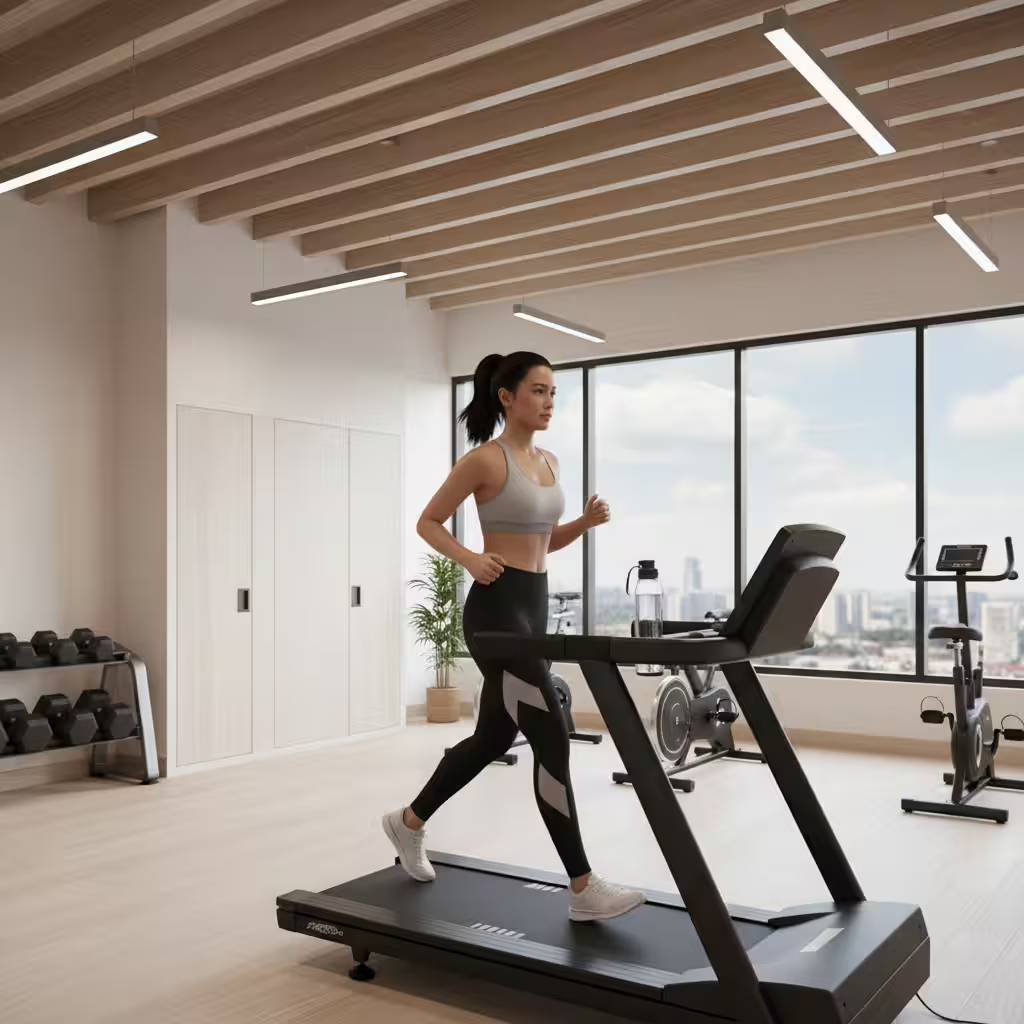
    At Lykke Kondo, the gym is integrated into your monthly HOA — maintained, accessible, and steps from your unit.

    No travel time.
    No separate contract.
    No surge pricing.

    That’s not luxury. That’s cost consolidation.

    The Coworking Shift

    Remote and hybrid work is still dominant. Many professionals subscribe to coworking spaces for focus days.

    Monthly coworking subscriptions can add another recurring expense.

    Here, the coworking space is built into the development.

    Need quiet focus? Go downstairs.
    Need a meeting zone? Use shared spaces.

    That’s built-in infrastructure — not an add-on bill.

    The Pool and Playroom Multiplier

    If you live in a house and want:

    • A maintained swimming pool
    • Secure play areas for children
    • Landscaped relaxation zones

    You either build and maintain them yourself — or you pay for club memberships.

    Maintenance, chemicals, cleaning staff, repairs.

    With centralized management, those costs are distributed efficiently across residents.

    Security as a Financial Layer

    24/7 security, CCTV monitoring, controlled access — these are not aesthetic features.

    They reduce risk exposure.

    Installing equivalent systems independently in a standalone property involves:

    • Equipment purchase
    • Installation
    • Ongoing monitoring fees
    • Maintenance

    In a managed development, those are structured into predictable dues.

    Developed by PH1 World Developers and built by Megawide Construction, Lykke Kondo integrates amenities into the lifestyle podium — not as decoration, but as systems.

    Located along Marcos Highway in Pasig, just 120 meters from Ayala Malls Feliz, accessibility further reduces external spending on transportation and memberships.

    Reframing the Question

    Instead of asking:

    “Are the amenities nice?”

    Ask:

    “What external expenses do these replace?”

    When you calculate:

    Gym membership
    Coworking subscription
    Security services
    Club access
    Travel cost to access these

    The math becomes clearer.

    Amenities are not indulgence.

    They are built-in lifestyle subsidies.

    In 2026, the smartest buyers don’t just buy units.

    They buy ecosystems.

    Which expense would you rather eliminate first?

  • An Office With a Bedroom Attached: The Future of Work-From-Home Living

    An Office With a Bedroom Attached: The Future of Work-From-Home Living

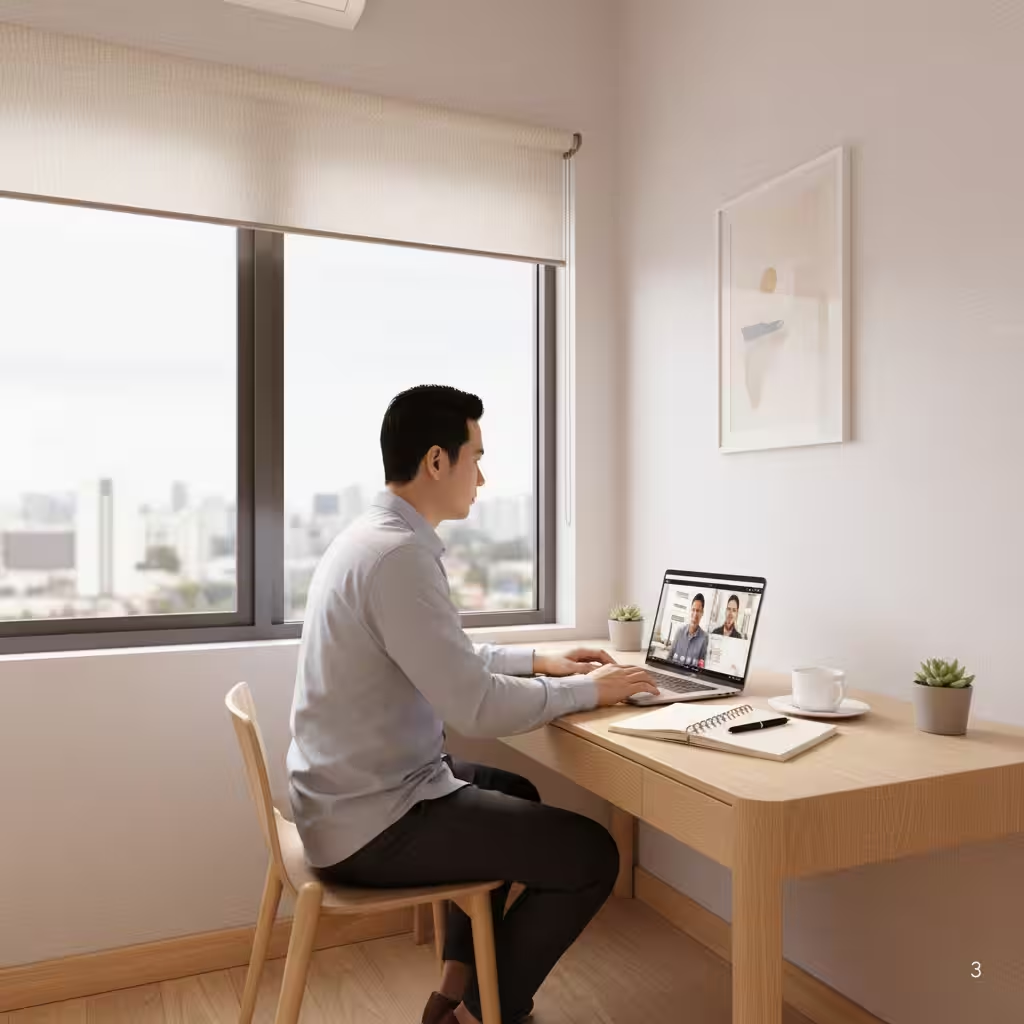
    At 9:02 AM, the meeting starts.

    Camera on.
    Audio clear.
    Background quiet.

    No café noise.
    No traffic horns.
    No unstable connection.

    For many professionals in 2026, work-from-home is no longer temporary. It’s structural. Hybrid setups are standard. Remote roles are competitive. Productivity is measurable.

    Which means your home is no longer just where you sleep.

    It’s where you perform.

    The Problem With Improvised Workspaces

    Kitchen tables were fine in 2020.

    They are not fine now.

    When your workspace shares space with your dining area, productivity drops. Focus fractures. The brain never fully switches into “work mode.”

    Common pain points:

    • Weak internet infrastructure
    • No dedicated desk area
    • Background clutter during calls
    • Household distractions
    • Power interruptions during meetings

    Your environment affects your output — whether you admit it or not.

    Designing for Performance

    At Lykke Kondo, developed by PH1 World Developers and built by Megawide Construction, the concept is simple:

    Create vertical separation.

    Add-Loft Technology converts engineered high ceilings into usable bonus space at no extra cost.

    That means:

    Living area below.
    Dedicated workspace above.

    Or bedroom above.
    Focused desk zone below.

    The separation creates psychological clarity. And clarity improves performance.

    Infrastructure That Supports You

    Work-from-home living isn’t just about a desk.

    It’s about systems:

    • Fiber-ready connectivity
    • 100% backup power for continuity
    • Double-pane windows for reduced noise and heat
    • Quiet, controlled environment
    • Coworking space within the development for alternate work zones

    Located along Marcos Highway in Pasig, just 120 meters from Ayala Malls Feliz, the convenience factor multiplies.

    Need a quick lunch break? Walk.
    Need coffee between meetings? Walk.
    Need a change of scenery? Use the coworking space downstairs.

    No commute.
    No lost hours.

    Time-Wealth Shift

    Drift:

    • Working from bed
    • Adjusting schedules around traffic
    • Losing momentum after interruptions
    • Stress during power fluctuations

    Shift:

    • Structured workspace
    • Clear start and end to your workday
    • Short transitions between roles
    • Reliable systems supporting you

    Your home becomes an asset to your career.

    In 2026, the most valuable homes aren’t just beautiful.

    They are performance environments.

    If your home were designed like a strategic tool instead of just a shelter, how much further could your work go?

  • Condo vs House in 2026: What You Actually Gain (and What You Give Up)

    Condo vs House in 2026: What You Actually Gain (and What You Give Up)

    There’s a quiet moment every homeowner knows.

    It’s Saturday morning.
    You planned to rest.

    Instead, you’re checking a leaking faucet.
    Sweeping the driveway.
    Scheduling a roof repair.
    Clearing drainage before the rain comes.

    Owning a house brings pride.
    It also brings perpetual maintenance.

    No one talks about that part enough.

    The Hidden Cost of “More”

    A standalone house gives you land, yes.

    But it also gives you:

    • Yard work
    • Exterior repainting every few years
    • Roof and gutter maintenance
    • Gate and perimeter repairs
    • Drainage monitoring during heavy rain
    • Security management

    In some nearby areas east of Pasig, flood preparation becomes part of the routine. In hillside locations, daily drives become longer and more fuel-intensive.

    The space is bigger.
    The responsibility is bigger too.

    The Relief of Vertical Living

    Now imagine this instead.

    You wake up.
    You go down to the gym.
    You swim without maintaining a pool.
    You leave security and CCTV monitoring to professionals.
    You call admin — not a contractor — when something needs attention.

    That’s the trade.

    At Lykke Kondo, developed by PH1 World Developers and built by Megawide Construction, convenience is structured into the system:

    • 24/7 security
    • 100% backup power
    • Elevator access
    • Maintained amenities
    • Managed common areas

    You’re not eliminating responsibility.
    You’re centralizing it.

    Time-Wealth: The Real Comparison

    Let’s quantify something rarely discussed.

    If house maintenance and errands take just 4–6 hours per week, that’s up to 24 hours per month.

    Almost an entire day.

    Drift looks like this:
    • Weekends spent fixing
    • Evenings spent worrying about repairs
    • Extra budget allocated for unexpected costs

    Shift looks like this:
    • Workouts before dinner
    • Slow Sunday mornings
    • Predictable monthly expenses
    • Energy redirected toward career or family

    Located along Marcos Highway in Pasig, just 120 meters from Ayala Malls Feliz, the convenience extends beyond the building.

    Groceries are walkable.
    Dining is accessible.
    Errands compress into short trips.

    You give up:

    Large yard space
    Full structural control
    Complete privacy of detached living

    You gain:

    Time
    Security
    Predictability
    Maintained amenities
    Urban accessibility

    In 2026, the smarter question isn’t “Which is bigger?”

    It’s “Which gives me more life back?”

    If you could reclaim one full day every month, how would you spend it?

  • Your Condo Is Not Small — It’s Just Under-Optimized

    Your Condo Is Not Small — It’s Just Under-Optimized

    She was standing in the middle of her living room, frustrated.

    “There’s no space,” she said.
    But when you looked closely, it wasn’t a space problem. It was a layout problem.

    The dining table doubled as a work desk.
    Boxes were stacked in corners.
    The bed blended into the living area.
    Everything overlapped.

    This is the moment many urban homeowners experience.

    They think they need a bigger unit.
    What they actually need is smarter separation.

    The Turning Point

    When she moved into a unit with Add-Loft Technology at Lykke Kondo, something shifted.

    Not the square meter count.
    The function.

    The living area stayed for living.
    The loft became a dedicated workspace and reading zone.
    Storage moved upward instead of outward.

    Suddenly, the same footprint felt twice as intentional.

    Vertical living creates psychological boundaries. And boundaries create calm.

    Designed to Work, Not Just Look Good

    Lykke Kondo, developed by PH1 World Developers and built by Megawide Construction, introduces engineered high ceilings converted into usable loft space — at no extra cost.

    That means:

    Studio
    23.56 sqm base + 9.37 sqm loft = 32.93 sqm total usable area

    1 Bedroom
    38.19 sqm base + 14.20 sqm loft = 52.39 sqm total usable area

    2 Bedroom
    60.94 sqm base + 21.51 sqm loft = 82.45 sqm total usable area

    You’re not paying for empty air.
    You’re gaining defined zones.

    In 2026, that matters more than ever.

    Remote work is still part of the norm.
    Kids need study corners.
    Couples need privacy even in compact spaces.

    When everything happens in one room without separation, stress rises.

    When functions are layered vertically, clarity returns.

    Location Multiplies Optimization

    Being along Marcos Highway in Pasig, just steps from Ayala Malls Feliz, reduces the need to store excess at home.

    You don’t need to overstock groceries.
    You don’t need to dedicate space for rarely used items.
    Access replaces accumulation.

    The condo doesn’t have to be massive.

    It just has to be optimized.

    Here’s the real question:

    Is your current space truly small — or is it just under-designed?

  • From Flood Zones to Peace of Mind: Choosing the Right Elevation for Your Next Home

    From Flood Zones to Peace of Mind: Choosing the Right Elevation for Your Next Home

    I spent the last few months studying residential movement patterns east of Metro Manila — specifically buyers choosing between Cainta, Marikina, Antipolo, and Pasig.

    The surprising insight?

    Most people don’t move because of price.
    They move because of stress.

    Stress from flooding.
    Stress from distance.
    Stress from unpredictable travel time.

    If you’re evaluating your next home in 2026, here are four non-obvious insights that matter more than brochures.

    1. Flood History Is a Lifestyle Factor, Not Just a Weather Issue

    Certain low-lying areas in Cainta and Marikina have long histories of heavy flooding during extreme rains. Even if a specific street doesn’t flood every year, the psychological effect remains.

    When heavy rain starts, anxiety follows.

    Where do we park the car?
    Will water enter the ground floor?
    Should we move appliances?

    That’s not just a structural issue. That’s a quality-of-life issue.

    1. Elevation Alone Isn’t the Answer

    Some buyers shift toward higher areas like Antipolo thinking elevation solves everything.

    But elevation often introduces a new variable: distance.

    Longer travel time to business districts.
    Steep daily drives.
    Higher fuel consumption.

    You trade flood risk for commute fatigue.

    1. Accessibility Is the Hidden Multiplier

    Location along Marcos Highway offers balance — accessible to Pasig, Quezon City, and nearby hubs without going too far uphill or too deep into flood-prone zones.

    And being just 120 meters from Ayala Malls Feliz changes daily logistics.

    Groceries.
    Pharmacy.
    Dining.
    Errands.

    All walkable.

    Accessibility reduces reliance on weather conditions and traffic fluctuations.

    1. Developer Quality Reduces Long-Term Risk

    Peace of mind is not only about geography. It’s also about construction quality.

    Lykke Kondo is developed by PH1 World Developers and built by Megawide Construction.

    Structural integrity, proper drainage systems, and engineering standards matter — especially in a country that experiences strong rains and typhoons.

    A well-built vertical community with managed systems can often provide more resilience than a standalone house exposed to direct environmental stress.

    Why This Matters in 2026

    Climate patterns are becoming more unpredictable.
    Traffic congestion continues to evolve.
    Remote work is still active but hybrid setups are increasing.

    Your next home should not only look good on turnover day.

    It should reduce anxiety during heavy rain.
    It should minimize commute variables.
    It should keep daily life efficient.

    Peace of mind isn’t dramatic.
    It’s quiet.
    It’s boring — in the best way.

    When it rains heavily next time, where do you want to be?

  • The Real Monthly Cost of Owning a Condo in Pasig (And What Most Sellers Don’t Explain)

    The Real Monthly Cost of Owning a Condo in Pasig (And What Most Sellers Don’t Explain)

    Let’s talk about the number serious buyers actually care about:

    Not the TCP.
    Not the discount.
    Not the “limited-time offer.”

    The real question is:
    How much does it cost to own this every month — sustainably?

    If you’re considering a condo in Pasig, especially along Marcos Highway, here’s the transparent breakdown most brochures skip.

    1. HOA Dues: What Are You Actually Paying For?

    Homeowners Association dues typically range depending on the project and amenities. But what matters more is what they cover.

    In a development like Lykke Kondo by PH1 World Developers, built by Megawide Construction, HOA dues contribute to:

    • 24/7 security personnel
    • CCTV monitoring
    • 100% backup power for common areas
    • Elevator maintenance (5 per tower, including service lift)
    • Cleaning of hallways and shared spaces
    • Amenity upkeep (gym, pool, coworking space, playroom)
    • Landscaping and pocket gardens
    • Administrative management

    You’re not just paying for “maintenance.”
    You’re paying for predictability.

    1. Utilities: Estimating Realistic Monthly Consumption

    For a studio or 1-bedroom unit with split-type AC and induction cooking:

    • Electricity: Depends on AC usage, typically manageable due to efficient layout and double-pane windows that reduce heat gain.
    • Water: Moderate usage, especially for 1–2 occupants.
    • Internet: Fiber-ready infrastructure reduces setup complications and improves reliability.

    Because units are efficiently sized and vertically optimized, cooling and lighting costs tend to be lower compared to larger horizontal homes.

    1. Reserve Fund and Assessment Risk

    A well-managed condo builds a reserve fund — this protects owners from sudden large assessments for repairs.

    Key questions serious buyers should ask:

    • Is the reserve fund properly structured?
    • Is the developer known for construction quality?
    • Are materials durable and low-maintenance?

    Construction quality matters. Projects built by established contractors reduce long-term risk exposure.

    1. Compare This to a House

    Owning a house may eliminate HOA dues — but introduces:

    • Roof repairs
    • Gate and perimeter maintenance
    • Plumbing replacements
    • Exterior repainting
    • Security costs
    • Drainage and flood mitigation in vulnerable areas

    In nearby flood-prone zones east of Pasig, homeowners sometimes shoulder unexpected repairs during heavy rainy seasons.

    With condo ownership, many of these risks are centralized and managed.

    The Calm Math

    When evaluating ownership, calculate:

    Monthly amortization

    • HOA dues
    • Utilities
      = True monthly commitment

    Then compare that to:

    Rent

    • Transportation costs
    • Gym memberships
    • Security expenses
    • Home repair savings

    Ownership becomes clearer when all variables are visible.

    Buying a condo is not just an emotional decision.
    It’s a systems decision.

    The right development isn’t the one with the loudest promotion.
    It’s the one with the most transparent math.

    Before choosing your next property, ask yourself:

    Are you buying square meters — or are you buying stability?

  • Bigger Isn’t the Smartest Real Estate Strategy in 2026

    Bigger Isn’t the Smartest Real Estate Strategy in 2026

    For years, buyers chased one number: price per square meter.

    The assumption was simple.
    Bigger space = better investment.

    But here’s the counter-intuitive truth:
    In 2026, bigger floor area is no longer the smartest metric. Usable space is.

    After studying buying patterns across Pasig and nearby areas for months, one thing is clear — the market has shifted. Smart buyers are no longer asking, “How big is it?”

    They’re asking, “How well does it work?”

    Why the Old Rule Is Breaking

    Large single-level units look impressive on paper. But when you factor in:

    • Dead hallway space
    • Underutilized corners
    • Higher cooling costs
    • Higher furnishing expenses
    • Longer cleaning and maintenance time

    The efficiency starts to drop.

    Meanwhile, vertical design is quietly outperforming horizontal sprawl.

    This is where Lykke Kondo changes the equation.

    Developed by PH1 World Developers and constructed by Megawide Construction, Lykke Kondo introduces Add-Loft Technology — engineered high ceilings converted into fully usable loft space at no extra cost.

    You’re not paying for “air.”
    You’re gaining structured, functional bonus space.

    Three New Rules for Smarter Buying

    Rule #1: Buy Vertical, Not Just Wide
    A 38 sqm flat unit and a 38 sqm unit with loft do not offer the same experience. When space expands upward, you create separation — workspace below, bedroom above. Living area below, storage above. Function multiplies without increasing the footprint.

    Rule #2: Optimize for Function per Peso
    Instead of stretching your budget for a larger base area, prioritize layouts that maximize usability. Add-Loft gives you up to 14–21 sqm of bonus usable space depending on the unit type. That shifts the value equation dramatically.

    Rule #3: Measure Time, Not Just Size
    Bigger spaces often mean longer cleaning time, higher electricity consumption, and more furniture to buy. A well-designed Scandinavian-inspired unit reduces visual clutter and daily maintenance. Efficiency becomes part of your lifestyle.

    Located along Marcos Highway in Pasig, just 120 meters from Ayala Malls Feliz, the value of Lykke Kondo isn’t just inside the unit — it’s in how intelligently the space is engineered.

    In 2026, the smartest buyers aren’t chasing square meters.

    They’re chasing efficiency.
    They’re chasing flexibility.
    They’re chasing extra — without paying extra.

    So here’s the real question:

    Would you rather own something bigger, or something smarter?

  • The 15-Minute Life Along Marcos Highway

    The 15-Minute Life Along Marcos Highway

    By 7:10 AM, the coffee is already brewing.

    You step out of your unit, take the elevator down, and within minutes you’re walking toward Ayala Malls Feliz. No traffic stress. No long queues for transport. No mental calculation of “What time should I leave?”

    This is what a 15-minute life looks like along Marcos Highway — and it changes everything.

    The Real Upgrade Isn’t the Unit. It’s the Radius.

    Living in Pasig means your daily essentials are no longer weekend errands. They’re part of your normal walking routine.

    Morning:
    Coffee downstairs or at the mall café. Quick grocery run before heading up. School drop-offs nearby.

    Midday:
    Remote work from home with stable fiber connection. If you need a break, step out for lunch within walking distance.

    Evening:
    Gym session. Quick dinner pick-up. A short stroll home under well-lit streets.

    No 90-minute commutes.
    No flood anxiety like in nearby low-lying areas.
    No steep uphill drives like farther east.

    Just access.

    The Hidden Cost of “Drift”

    Let’s quantify something most people ignore.

    If you spend 1.5 hours commuting daily, that’s 30 hours per month.
    That’s almost four full days — gone.

    Drift looks like this:
    • Waking up earlier than necessary
    • Sitting in traffic along congested routes
    • Canceling gym plans because you’re too tired
    • Weekends spent running errands

    Time leaks quietly.

    The Shift

    When your mall, grocery, dining spots, and transport hubs are within 120 meters, your day compresses in the best way.

    Shift looks like this:
    • Slow mornings instead of rushed ones
    • Evening workouts without excuses
    • Dinner at home before 7 PM
    • More presence with family
    • Mental clarity from predictable routines

    The condo becomes a time-saving device.

    Built for Vertical Living

    At Lykke Kondo, developed by PH1 World Developers and built by Megawide Construction, the idea of “extra” goes beyond location.

    Add-Loft Technology gives you bonus usable space at no extra cost. That means your workspace, reading nook, or storage zone doesn’t compete with your living area. The footprint stays efficient — but your lifestyle expands upward.

    It’s not about owning the biggest unit in the city.
    It’s about reclaiming the most hours in your week.

    Because in 2026, space is valuable.
    But time is wealth.

    If you had 30 extra hours every month, how would you use them?